How it works
A vault that stays closed until the right people need it
Digital Legacy Vault helps you store the important things now, then makes access depend on a real request and the release rules you choose.
What makes it different
It is not just a folder of secrets. It is a controlled handoff plan for the people who may need to act later.
Security model
Sensitive records are encrypted before storage, stay private while you're active, and only follow the release path after a legitimate request.
Release path
The three-step flow behind vault access
This is the part visitors need to understand quickly before they trust the product with sensitive records.
Policy controls
The owner decides what release really means
Set your own thresholds: timed release, confirmations, or both together.
Inactivity window
7-365 daysChoose how long you must be inactive before timed release can become eligible.
Reminder cadence
1-90 daysChoose how often the vault checks in while a request is pending.
Trusted confirmations
2+ confirmationsThe requester counts as the first confirmation, so at least one other confirmation-capable contact is still needed.
These are adjustable ranges, not fixed presets. Confirmation thresholds depend on how many trusted contacts are granted to a collection.
What the app is trying to solve
Most vaults stop at storage. This one is built for the harder moment: making sensitive records reachable later by the right people, under the right conditions.
Related guides
Read the planning questions behind the release model
These guides explain the estate-planning problems people are trying to solve before a trusted contact or executor ever needs the vault.
Continue on mobile
Use Digital Legacy Vault on iPhone and Android when you want the vault, collections, and trusted-contact workflow with you.


Be first to know
Get occasional product updates and new planning guides
Join the public updates list for release notes, new articles, and enterprise rollout news. This is separate from account, billing, and security emails.
Use this if you want broad product and content updates without creating an account.
FAQ
Questions about the release model
These answers fill in the operational details behind the release model.
What starts the release path?
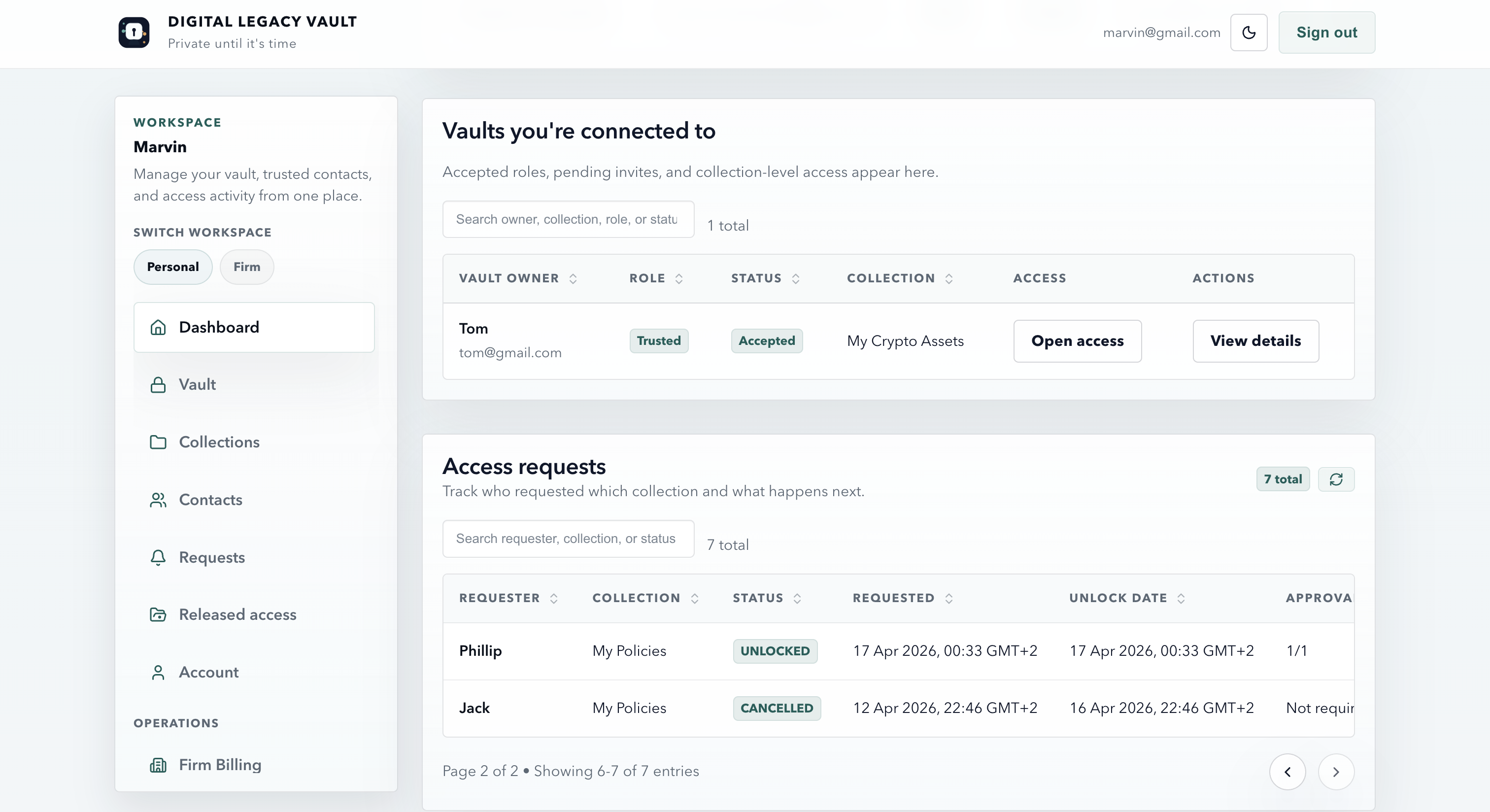
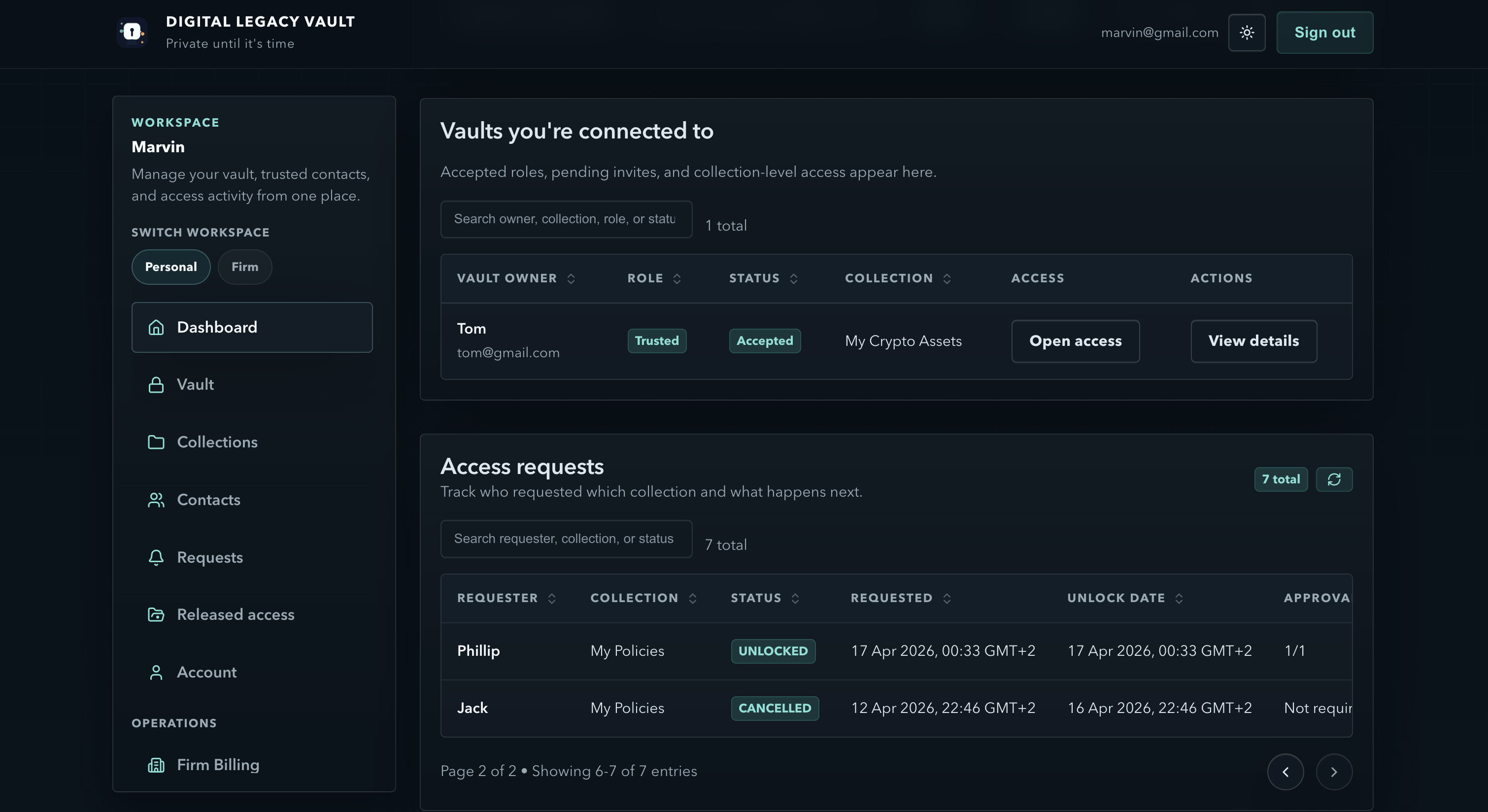
A trusted contact must request access first. The vault does not start a release window just because a contact exists on the account.
Can the owner combine timed release and trusted confirmations?
Yes. The owner can choose timed release only, trusted confirmations only, or require both together before access can complete.
Do collections matter, or is everything unlocked at once?
Collections matter. Access requests are collection-specific, so different groups of records can follow different grants and release rules.